Battery Materials Research
We specialize in battery preparation technology research, focusing on overcoming existing energy storage challenges by innovating in electrode materials, battery chemistry, and manufacturing processes to improve performance, enhance safety, and reduce costs. Sustainability and recycling technologies for batteries are also emphasized to mitigate environmental impacts and foster the growth of green energy.
Exploring new materials:
battery technology research and green development.

Research on high-performance battery materials: complex testing procedures and data processing.
- In the academic research of battery materials, ion diffusion coefficient is a key physical parameter to measure the performance of electrode materials, and common testing methods include constant current intermittent titration (GITT), constant potential intermittent titration (PITT), cyclic voltammetry (CV), electrochemical impedance spectroscopy (EIS) and so on.
However, the process of ion diffusion coefficient calculation is often very complicated and cumbersome again.
- Research on battery materials is pursuing the development of batteries with higher stability and longer life to meet the long-term demand for energy storage.
How does NEWARE BTS8.0 meet your needs for ionic diffusion coefficient calculations and long-cycle testing?
- BTS8.0 software is a professional testing software used in conjunction with NEWARE's battery charging and discharging equipment, which is capable of setting up and executing a wide range of complex test steps, including GITT and PITT.
- Long-term testing: Supports continuous testing for up to one year, with durations measured in days.
Meets the various testing requirements specified by industry standards.
NEWARE equipment meets the testing requirements of the following industry standards: IEC 61960, IEC 61436, IEC 62133, UL 1642, ISO/IEC 17025, JIS C 8715, SAE standards, UN38.3, etc.
According to IEC 61960 standard, the current of charge/discharge test is based on the rated capacity value of the battery (C5Ah), which is expressed as a multiple of ItA, where ItA=C5Ah/1 hour.
Clause 7.1 of the IEC 61960 standard states: Before charging, the battery or battery pack shall be discharged at a constant current of 0.2I t A to the specified discharge termination voltage in an environment of 68°F±5°F (20±5°C). The battery or battery pack shall be discharged at a constant current of 0.2ItA to the specified discharge termination voltage.
Unless otherwise specified in this standard, the charging of the battery or battery pack shall be carried out under 68°F±5°F (20±5°C) environment with the charging method specified by the manufacturer.

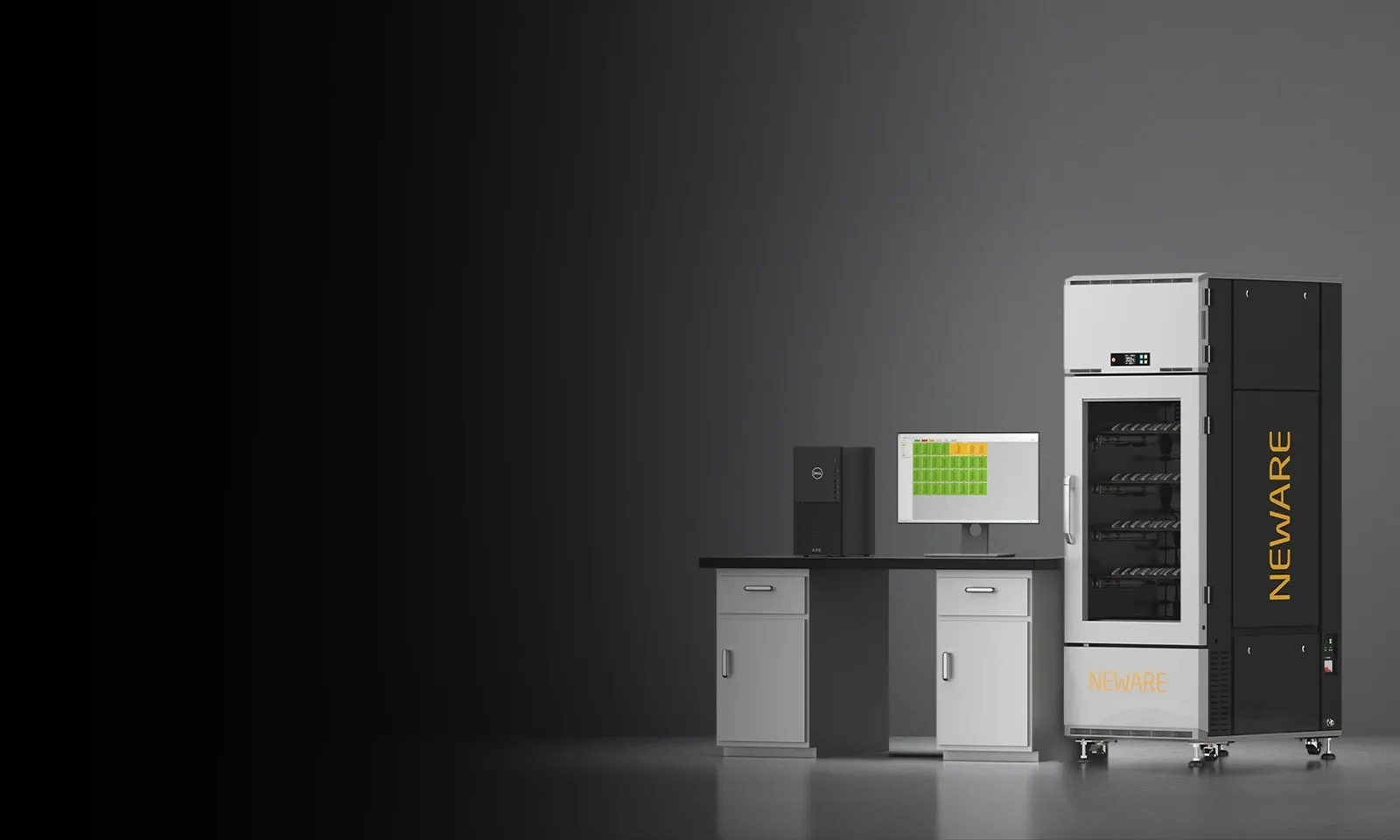
Integrated Temperature Control Testing
Integrated Temperature Control Testing
Integrating charging and discharging tests with the functions of a constant temperature chamber or a high/low temperature test chamber, the integrated battery testing solution can perform comprehensive performance evaluations of batteries under different temperature conditions.
- Integrated design: combining charge-discharge testing with temperature control functions in one unit simplifies the test setup, avoids messy wiring, and greatly saves experimental space.
- Temperature adaptability testing:by simulating extreme climatic conditions, it tests the performance changes of batteries at various temperatures to assess their environmental adaptability and reliability.
- Thermal effect analysis: during the charging and discharging process, the system can monitor the thermal response of the battery, analyze the thermal management and cooling requirements of the battery, and provide data support for the thermal design of the battery.
- Cycle life assessment:under preset temperature cycling conditions, it evaluates the cycle life of the battery to understand the impact of temperature changes on the aging process of the battery.
- Safety performance testing:conducting battery tests in high or low temperature environments can reveal safety risks of batteries under extreme conditions, providing a basis for the safety design of batteries.
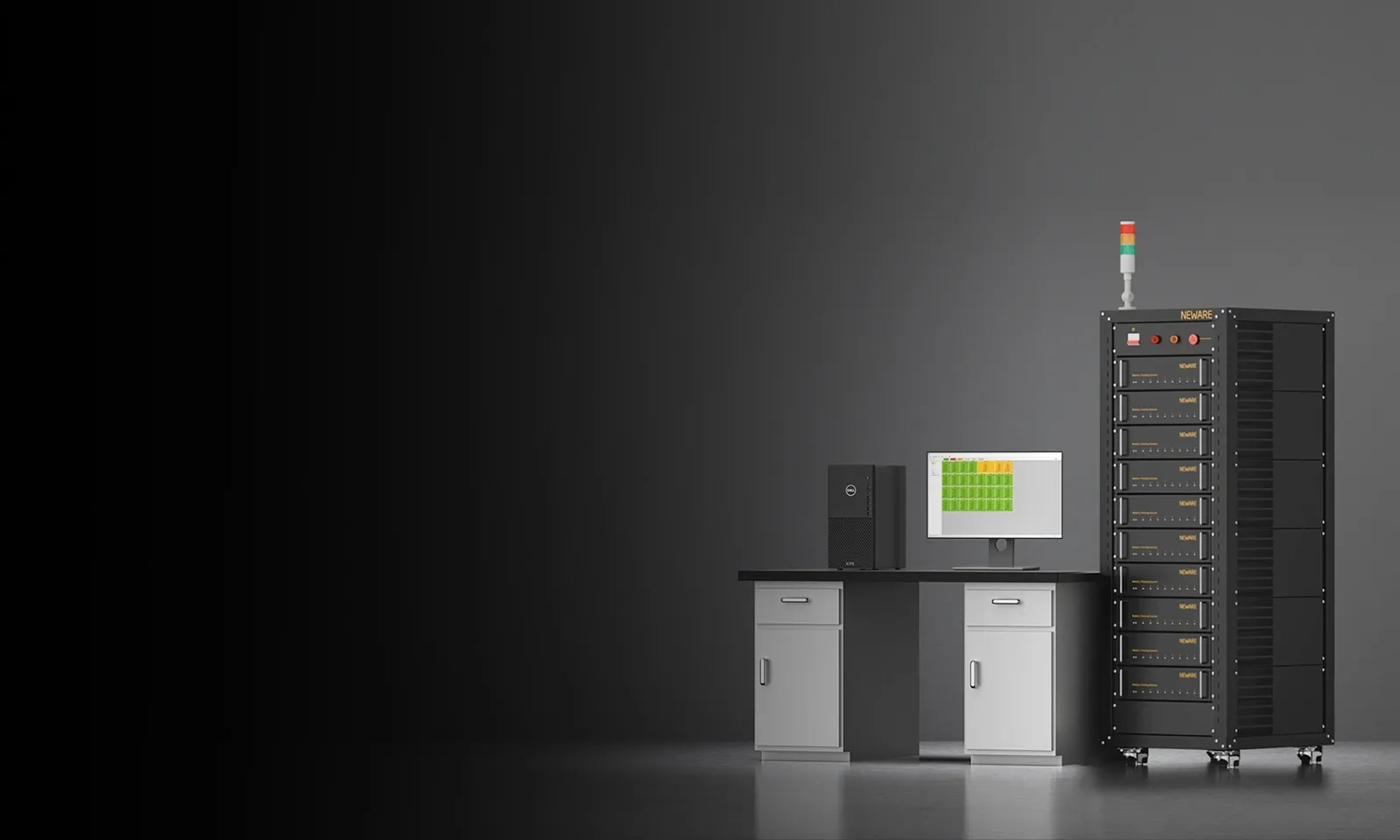
Standard Testing
Standard Testing
NEWARE's star product, making it an ideal choice for laboratory battery material research. It offers precise current control and measurement, meeting various charging and discharging testing needs such as cycle life testing, rate testing, GITT , and PITT testing. This is crucial for researching new anode materials, electrolytes, and the overall performance of batteries.
- Multifunctional testing:integrates various testing modes to adapt to different research and development needs, providing a comprehensive solution for battery performance evaluation.
- High-precision measurement: employs advanced measurement technology to achieve precise control and monitoring of current and voltage, meeting the high standards of scientific research-grade battery testing.
- Flexible testing configuration:suitable for testing protocols of various types of batteries, supporting tests for batteries of different sizes and types, accommodating the laboratory's diverse testing requirements for various specifications and sizes.
- User-friendly:equipped with an intuitive operation interface and data processing software to simplify the testing process and enhance user experience.
- Data recording and analysis:features robust data recording capabilities, facilitating in-depth analysis and long-term tracking of battery performance by researchers.
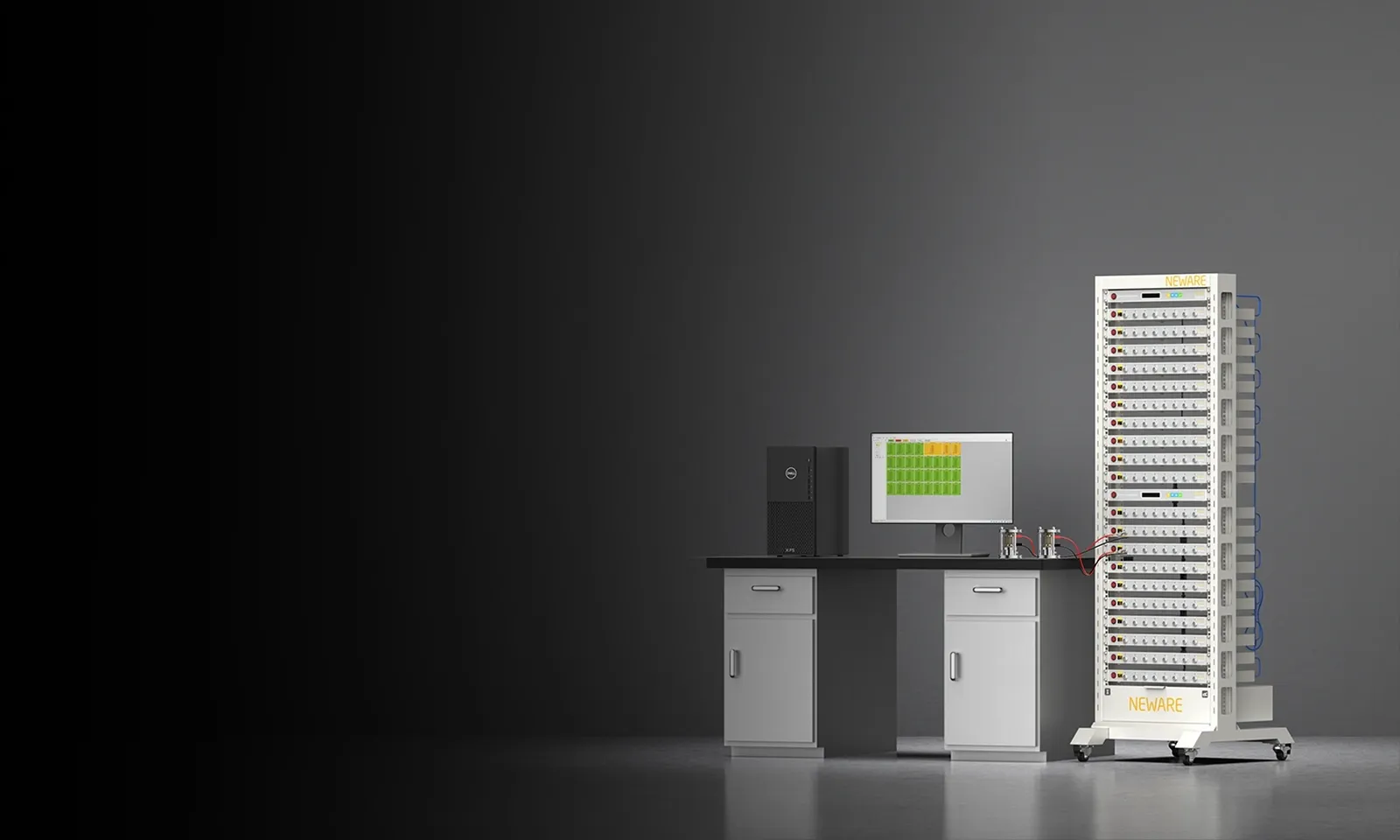
Ultra-High Precision Testing
Ultra-High Precision Testing
Developed for precision testing, this system meets diverse charging and discharging test needs with accurate data. Its multi-range design ensures precision, and SMBUS communication enables real-time data monitoring and analysis, aiding researchers in advancing battery material electrochemistry, design, energy density, and cycle stability.
- High compatibility:suitable for different types and sizes of 3C batteries, including pouch and cylindrical batteries.
- Accurate internal resistance measurement:DCIR (Direct Current Internal Resistance) testing can accurately measure the battery's internal resistance, providing important indicators of the battery's health and aging status.
- Electrochemical activity assessment: CV (Cyclic Voltammetry) testing helps to evaluate the electrochemical activity of battery materials and understand the electrode reaction kinetics.
- Multidimensional testing:Combining various testing methods allows for the assessment of battery performance from different perspectives, providing comprehensive data support for battery optimization and improvement.
- SMBus communication:equipped with battery communication capabilities to monitor the battery status in real-time.